Sitting in a circle talking about your feelings has its place. But there's something that happens when you push your body to its edge in nature that no therapy room can replicate.
I'm climbing an iceberg in Iceland. My hands are numb. The ice is slippery in a way that makes you question every decision that led you to this exact moment. My breathing is controlled because it has to be. There is no space for the usual noise up here, the self-doubt, the old stories, the what-ifs. There is only the next handhold and the commitment to keep moving.
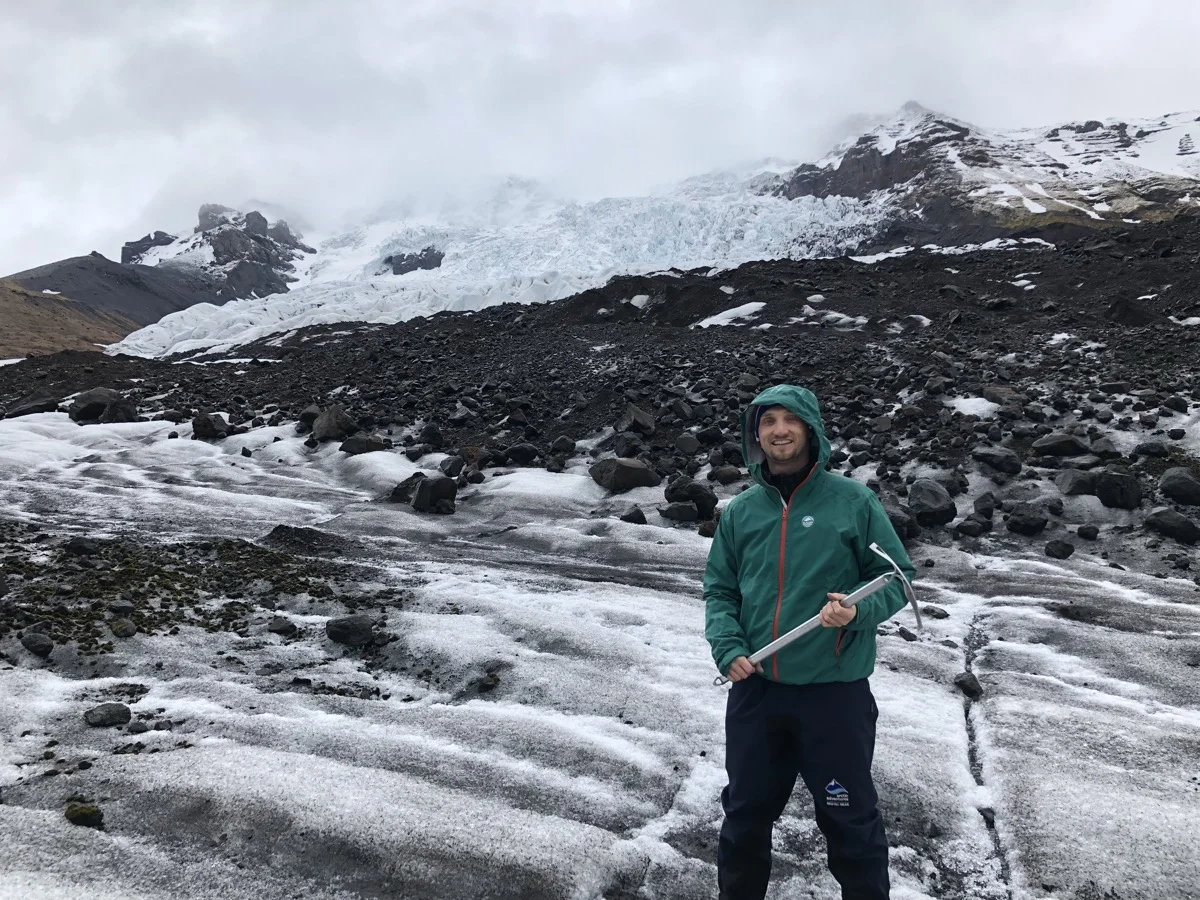
That moment, right there, is what adventure-based recovery is about. Not the Instagram photo (though it's a good one). Not the bragging rights. It's the experience of being so fully present that your usual defense mechanisms simply can't operate. And in that gap, something real has a chance to grow.
What the Research Says
Adventure therapy isn't a fringe idea. It's a recognized therapeutic approach with a growing body of evidence behind it. A major systematic review published in the BMJ found that physical activity significantly reduces depression and anxiety, with effects comparable to medication in many cases. Doctors in Finland are now literally prescribing time in nature as part of primary care, recommending a minimum of five hours a month outdoors for measurable health benefits. The research is clear: movement in challenging outdoor environments can reduce anxiety, improve self-efficacy, build distress tolerance, and strengthen interpersonal skills.
The mechanism is straightforward. When you're in a challenging environment, whether that's underwater with sharks, on a mountain face, or surfing in unfamiliar waves, your body activates. Your nervous system lights up. And if you have clinical support in that moment, you can learn to move through activation rather than numbing it, avoiding it, or medicating it.
That's the opposite of what addiction teaches you to do.
My Approach: The Groan Zone
My buddy has a name for it: the groan zone. It's that space right at the edge of your comfort zone. Not reckless. Not traumatic. Just uncomfortable enough to wake something up. I've been living in and around that zone for 19 years of sobriety, and I've watched it change people.
When I take a client diving with sharks or hiking an active volcano, I'm not doing it for fun (though it is fun). I'm doing it because those environments strip away the performance. You can't fake it 30 feet underwater. You can't intellectualize your way up a mountain. You have to be in your body, in the moment, responding to what's real. For people who have spent years dissociating, numbing, or hiding, that kind of presence is radical.
I carry clinical training alongside this work: a Master's in Addiction Counseling with a focus on co-occurring disorders from Hazelden Betty Ford and an MBA from Pepperdine Graziadio Business School. The adventures are intentional, not recreational. Every experience I design for clients has a therapeutic purpose, and there's always a debrief, integration, and connection back to the larger recovery work.
Why Sitting Still Doesn't Work for Everyone
Let me be clear, I'm not against traditional therapy. It saved my life early on, and I refer to therapists regularly. But for some people, the talking-in-a-room model hits a wall. They can articulate their patterns perfectly. They understand their triggers intellectually. They could teach a class on attachment theory. And they still drink.
The gap between knowing and doing is the gap that adventure closes. You don't just understand that you can survive discomfort. You experience it. You don't just believe you're capable. You feel it in your hands when you summit, in your lungs when you surface, in your whole body when the wave releases you.
I wrote about this in What a Sober Companion Actually Does, where I describe how immersive experiences function as accelerators for the deeper clinical work. If you're curious about what a full companion trip looks like day to day, that post walks through the entire process.
It's Not Just for Early Recovery
One of the biggest misconceptions is that adventure-based recovery is only for people fresh out of treatment. Some of my most meaningful engagements have been with people who have years of sobriety but feel stuck. They stopped growing. The meetings feel stale. The identity they built around being "a sober person" doesn't feel like enough anymore.
That's not a failure. That's a signal. It means you're ready for the next level of the work. And sometimes the next level requires a completely different environment. I've taken clients with 10+ years of sobriety on trips that cracked them open in ways they didn't expect. New tears, new realizations, new freedom. Not because they were in crisis, but because they were ready to expand.
If you're considering international travel in recovery, whether early or established, I've written a full guide on navigating that practically and emotionally.
The Difference Between Adventure and Recklessness
I need to say this clearly because it matters. Adventure-based recovery is not about adrenaline addiction replacing substance addiction. That's a real concern and one I take seriously. Every experience I design has clinical intention behind it. There's a difference between jumping out of a plane because you're chasing a high and standing at the edge of a volcano because you're learning to be present with fear and wanting to be more deeply grounded with the earth.
The structure matters. The clinical support matters. The intention matters. Without those things, it's just a dangerous vacation. With them, it's transformation.
Who This Is For
If you've tried the traditional approaches and something isn't clicking, this might be your path. If you're a family member exploring options, I wrote a guide on hiring a sober companion that covers qualifications and what to look for. If you're not sure what level of support you need, that comparison will help too.
The world is bigger than your recovery story gives it credit for. I've seen that firsthand across 50 countries and 19 years of sobriety. If identity and self-acceptance are part of your journey, my book Love Unlocked explores that work in depth. More at loveunlocked.com.
Curious about adventure-based recovery or 1:1 clinical coaching?
The first conversation is always free. Learn more at Nomadic Addictt or email me directly. Explore my full range of work at zacspowart.com.