After years sober, the recovery story starts to fade. What fills the space when sobriety stops being your whole identity?
Nobody warned me about year five.
Years one through three, sobriety was the whole story. It was the first thing I thought about in the morning and the last thing I checked in with at night. Every decision ran through that filter. Every conversation had a recovery thread woven through it. It was consuming, and honestly, it needed to be.
But somewhere around year five, something shifted. The obsession softened. The white-knuckling was long gone. I wasn't fighting for sobriety anymore, I was just living. And that's when it got confusing.
Because if I'm not the guy in recovery, who exactly am I?
The Identity Trap Nobody Talks About
Early sobriety gives you something to hold onto. A label, a community, a story. "I'm in recovery" is a complete sentence that explains a lot about you in a short amount of time. It gives people context. It gives you context.
The problem is that identity can become a cage.
I've worked with people, as a sober companion and coach, who are fifteen or twenty years sober and still introducing themselves primarily through their addiction story. Not because it's dishonest, but because they never built anything else. The recovery narrative filled the whole frame, and when it started to quiet down, there was this unsettling silence underneath.
That silence isn't emptiness. It's actually an invitation. But it can feel terrifying if you've never learned to sit with it.
For me, the answer started coming through movement. I got curious about the world. I started traveling, diving deeper into the ocean than I ever thought I could, literally and figuratively. I've done over 350 scuba dives now, swam with whales and sharks, and crossed through 50+ countries with a clear head. Not to run from something. To run toward a version of myself that had nothing to do with what I used to be.
Places like Fushimi Inari in Kyoto, walking through thousands of torii gates in silence, no agenda, no story to tell anyone. Just me and the path. Those are the moments where the new identity starts to take shape without you even realizing it.
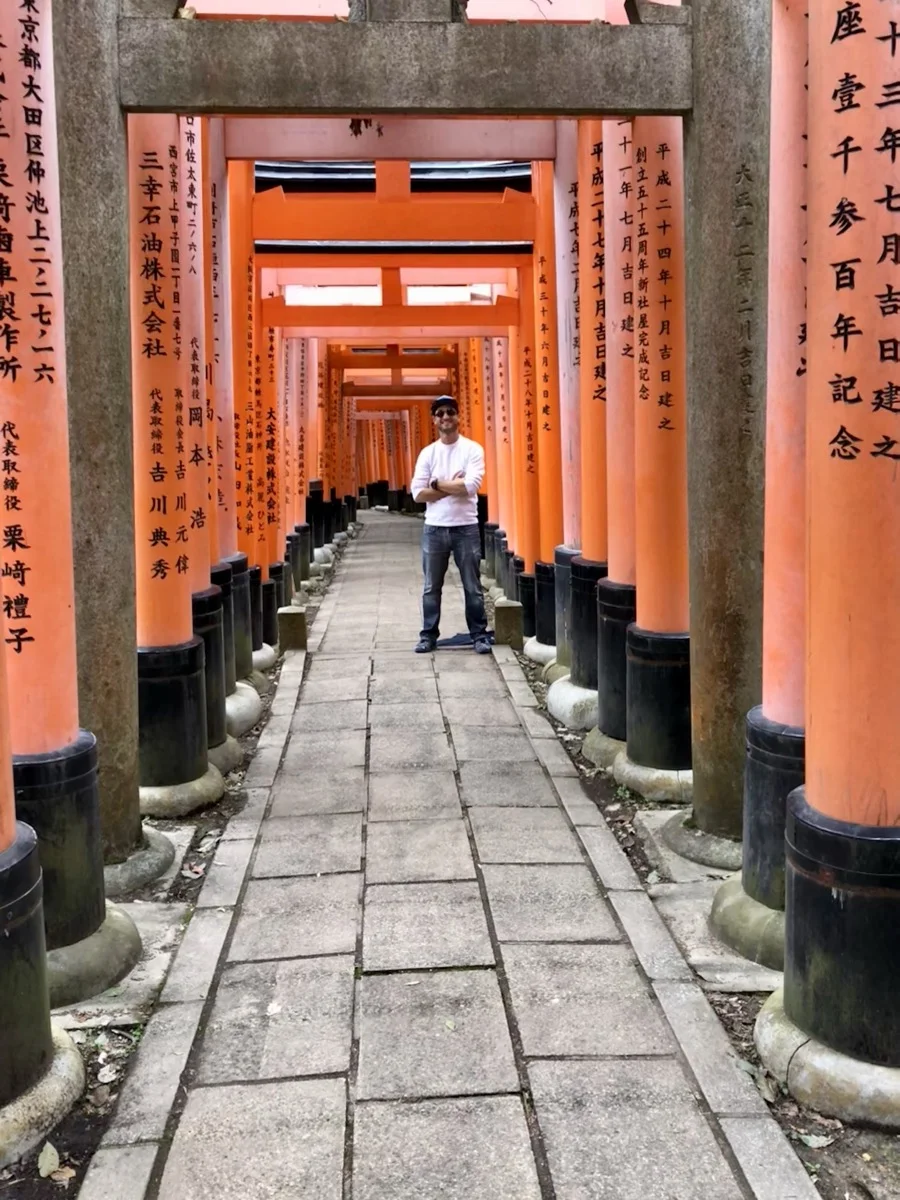
That shift didn't erase the recovery story. It just stopped letting that story be the only one.
When Sobriety Becomes the Floor, Not the Ceiling
Here's a reframe that changed everything for me: sobriety is not the destination. It's the floor you build everything else on.
In early recovery, that floor feels miraculous because you spent so long without one. Of course it's the main thing. Of course you talk about it constantly. You should.
But at some point, living on the floor stops being enough. You're supposed to build upward. A life. A purpose. Relationships that aren't held together by shared trauma. Work that actually means something to you. Adventures that remind you your body is capable of extraordinary things.
Nomadic Addictt, the sober travel community I built at nomadicaddictt.com, came directly out of this question. I wanted to show that sober people aren't just surviving, they're doing things that most people with a drink in their hand would never dare. Freediving. Crossing continents. Sitting with themselves in total silence in countries where nobody knows their name.
That's not a recovery story. That's a life story. And there's a big difference.
The Quiet Work of Building a New Self
So how do you actually do it? How do you figure out who you are when the recovery label no longer carries the full weight of your identity?
Honestly, it's slow work. It's uncomfortable in a different way than early sobriety was. There's no meeting for it. No thirty-day chip. No sponsor who's been through exactly this.
For me, it looked like asking questions I'd been avoiding. What do I actually enjoy, not what do I enjoy because it's sober-safe, but what genuinely lights something up in me? What kind of relationships do I want, and what patterns have I been repeating that have nothing to do with substances and everything to do with who I became before I got sober?
That second question pulled me deep into attachment theory, into the relational work I eventually wrote about in my book and built a whole coaching practice around at zacspowart.com. Because here's what I found: getting sober clears the fog, but it doesn't automatically heal the underlying stuff. The identity work, the relational work, the self-acceptance work. That's a separate project, and it's lifelong.
The good news is it's also the most interesting project you'll ever take on.
You're Not Losing Your Story. You're Expanding It.
If you're somewhere in long-term sobriety and you're feeling this quiet disorientation, I want you to hear something clearly. You're not doing it wrong. You're not losing your program or your gratitude or your hard-won clarity.
You're just being asked to grow into more than the recovery story.
The person you were before addiction, the person you became in early sobriety, the person you're becoming now. These aren't competing versions. They're all part of the same unfolding. The question isn't which one is real. The question is: what do you want to build next?
Sobriety gave you back your life. The next part is figuring out what you actually want to do with it.
So here's what I want to leave you with: if you stripped away the recovery narrative entirely, not because it doesn't matter but just as an experiment, who would you say you are? What would you point to? What's being built on that floor you worked so hard to lay down?
That answer is worth sitting with.

Interested in 1:1 sober coaching, sober companionship, or custom tailored sober retreats?
Whether you are navigating early sobriety, planning your first sober trip, or looking for someone to walk alongside you, I am here. My book Love Unlocked digs into the identity and relationship work underneath it all. Interested in 1:1 Clinical Coaching? Learn more at Nomadic Addictt or start the conversation.