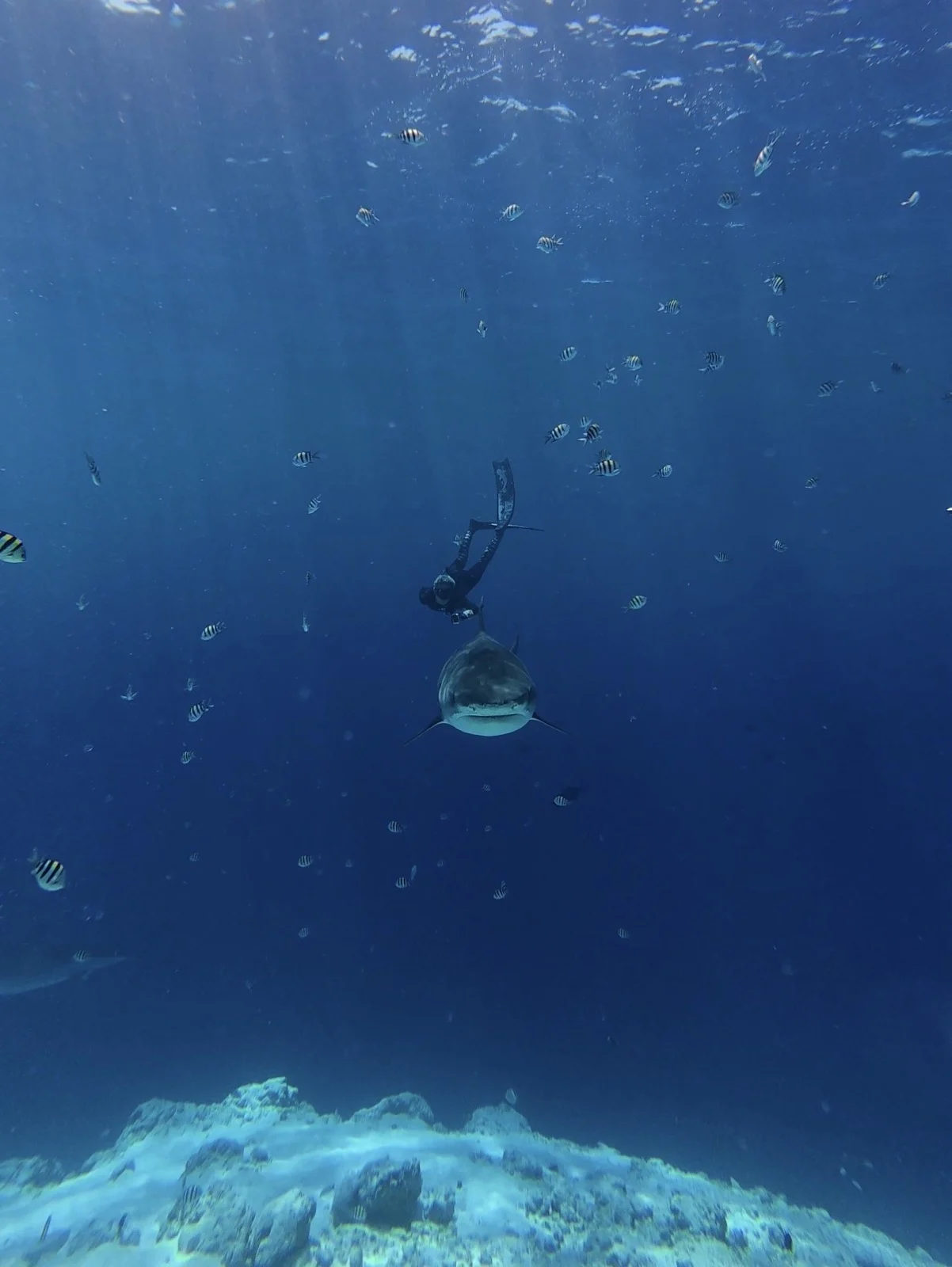
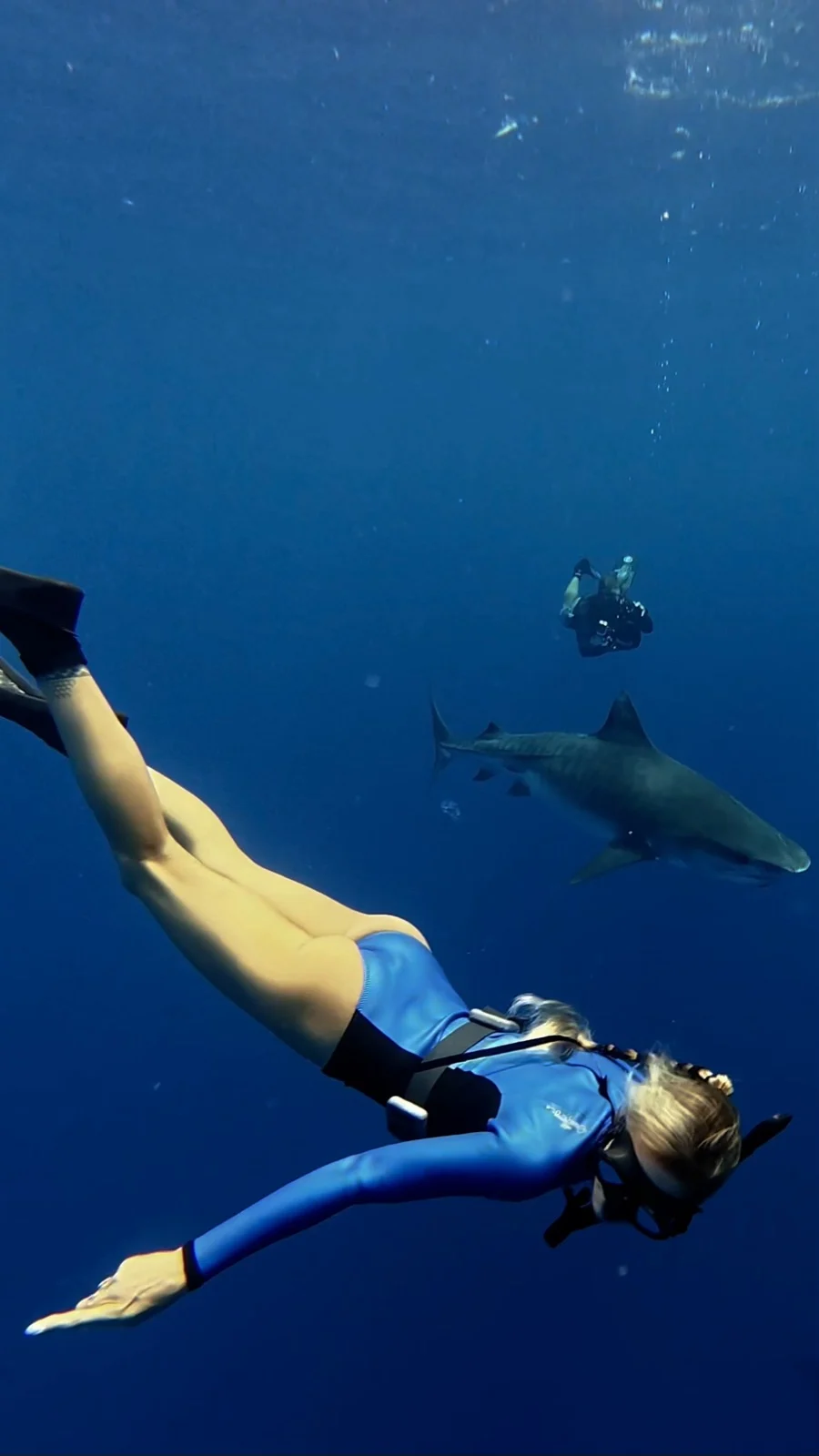
Freediving with tiger sharks in Fuvahmulah with Ocean Ramsey and the local Pelagic Divers Fuvahmulah team. This is the kind of high no drink ever came close to.
There is a moment underwater, hanging on a single breath, when a tiger shark turns and looks at you, and your whole nervous system goes quiet. Not frozen. Quiet. Fully, completely present.
Imagine holding your breath for over a minute in some of the clearest blue water on earth, with some of the best shark divers in the world all around you, and anywhere from four to eight tiger sharks, ten to twelve feet or bigger, cruising through the blue. Welcome to Fuvahmulah, one of the rarest places on the planet where a moment like this is even possible.
That is the high I chase now. And it is one that no drink, no drug, nothing I ever put in my body, came close to touching.
It might sound like an adrenaline rush, a high in and of itself. It is the opposite. These are some of the calmest moments of my life. If it were adrenaline pumping through me, there is no way I could stay down that long on a single breath with a tiger shark gliding past. My heart rate slows. My body settles. I am more present and more at peace down there than I ever was with a drink or a drug in my hand.
This trip hit me on a level I did not see coming. I came into it off an ear injury that pulled me out of the water completely for more than a year, and still limits my scuba diving to this day. So to be back there, capable of staying down for an extended stretch on a single breath and fully present for these moments, meant more than I expected, even with the injury. That is the strength of sobriety, the power of a positive mindset, and plain stubborn persistence, plus having quality people around you who believe in you when you are finding your way back. That is a huge part of what this trip was really about.
I was invited on a Juan Sharks freediving expedition with Ocean Ramsey and Juan Oliphant to Fuvahmulah, a remote island at the southern tip of the Maldives that has quietly become the tiger shark capital of the world. Every dive was run by the local team at Pelagic Divers Fuvahmulah, one of the most prestigious operations on earth for getting in the water with these animals. No cages, no tanks, just breath. I went to freedive with tiger sharks, and I went sober, which is the only way I do anything these days.
From a Bottle Alone to Blood in the Water
Let me paint the full picture of how strange and beautiful my life has become.
It is a Wednesday morning. We are in the water just outside the harbor with friends who are slicing open tuna heads, squeezing the blood into the blue to bring the tiger sharks in close so we can swim with them. Cageless. We drop down together as a team, sometimes one at a time on our own, always watching each other's backs. And right in the middle of it, I flashed on another version of me: twenty years old, alone in an apartment, drowning my anxiety with a bottle, terrified of the world and everyone in it.
Same guy. Completely different life.
I never would have met Ocean Ramsey, or Juan, or Inah, or found myself in that water at all, if I had not first learned to become my authentic self and lean hard into sober travel. It came from putting myself in uncomfortable positions, sometimes literally, and trusting that the version of me on the other side of the fear was worth meeting. That is the quiet promise underneath everything I do. Get honest, get sober, get uncomfortable, and your life will hand you things you cannot even picture from where you are standing now.
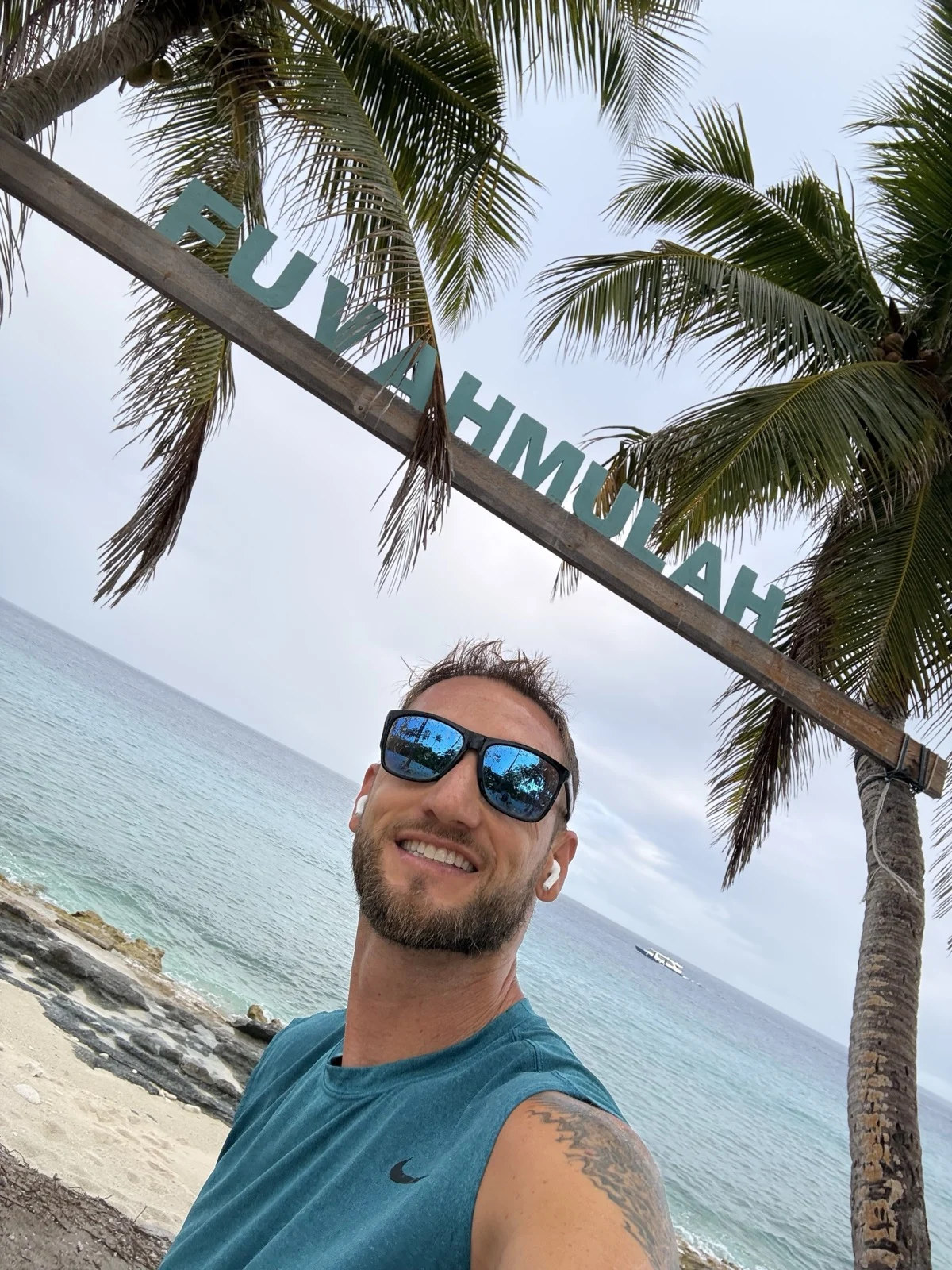
Fuvahmulah: The Tiger Shark Capital of the World
In most places on earth, seeing a tiger shark is a rare gift. In Fuvahmulah, the deep water comes right up to the island, and the tigers come with it, reliably, year round. That geography is almost unheard of, and it has turned this tiny speck in the Indian Ocean into a pilgrimage for divers who want time with one of the ocean's true apex predators.
This is not hype. My buddy Inah and his local Pelagic Divers team have catalogued well over 300 individual tiger sharks here, most of them female (the bigger ones), one of the largest known aggregations of tiger sharks on the planet. The main dive site, a shallow horseshoe plateau the locals call Tiger Harbour, sits about eight to ten meters down, a one-minute boat ride from the harbor, with sightings year round.
Getting there is not easy. That is part of the magic. You have to want it. And when you finally slip into that blue water and the first big tiger cruises past, unbothered and impossibly graceful, you understand instantly why people travel across the world for this.
Is It Safe to Dive With Tiger Sharks? Can You Freedive With Them?
These are the two questions I get every single time. So, honestly: yes, and yes, with the right people.
Tiger sharks are apex predators and they deserve real respect, not fear and not fantasy. Attacks on divers are extremely rare. The International Shark Attack File logs only around seventy to eighty unprovoked shark bites worldwide in a typical year, with a long-term average of about six human deaths.
Now put that number in perspective. Think of the sheer volume of people in the ocean every single day, everywhere on earth. Surfers, swimmers, freedivers, scuba divers, spearfishers, night dives, and dedicated shark dives running nonstop in Hawaii, South Africa, the Great Barrier Reef, and right here in the Maldives. Countless millions of us, in their territory, around the clock. Against all of that, seventy or eighty bites is almost nothing, and six deaths across every shark species on the planet is astonishingly rare. You are more likely to die on the drive to the beach, or from a falling coconut, than from anything waiting for you in the water. It is even well documented that you are more likely to be bitten by a New Yorker than by a shark. What actually keeps you safe is the operator, the briefing, the guides in the water, and your own calm. I have written before about whether it is safe to dive with tiger sharks and what these animals have taught me about fear, and it all comes back to the same thing. The ocean is not out to get you. Your ego is the risk, not the shark.
To answer the question everyone asks: the dives are cageless, and the sharks are drawn in beforehand with scent, not fed by hand during the dive. You are in open water with dedicated safety divers watching every angle.
Freediving with them takes it to another level. No tank, no bubbles, just a breath and your own stillness. Without the noise of scuba gear, the sharks stay curious and relaxed instead of spooked, so they come closer and act more like themselves. Sharks read panic, so you cannot fake calm down there. You have to actually be calm. For someone who spent years running from his own feelings, learning to be genuinely still next to a tiger shark is about the purest emotional sobriety practice I can imagine. It is the same nervous-system work as staying present when being fully seen feels dangerous, just with bigger teeth.
Diving With the Best: Ocean Ramsey, Juan Oliphant, and Pelagic Divers Fuvahmulah
I did not do this alone, and I would not have wanted to. I was in the water alongside Ocean Ramsey and Juan Oliphant of One Ocean Diving. If you have seen the Netflix documentary Shark Whisperer, you know Ocean's work: decades of shark research, conservation, and a way of moving with these animals that reframes everything you thought you knew about them. I kept it respectful and hands-off in the water, letting the sharks set the terms and come to me on their own time.
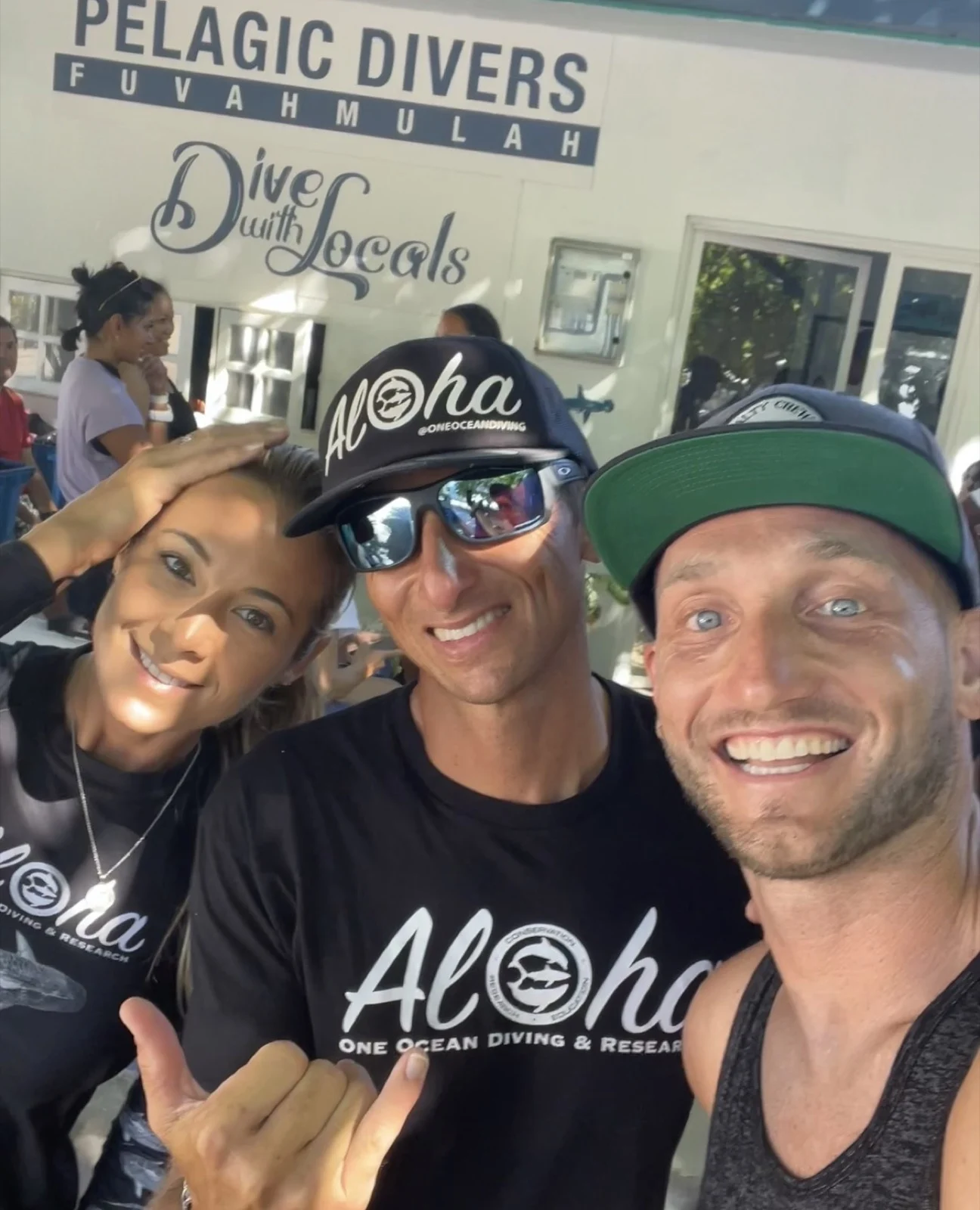
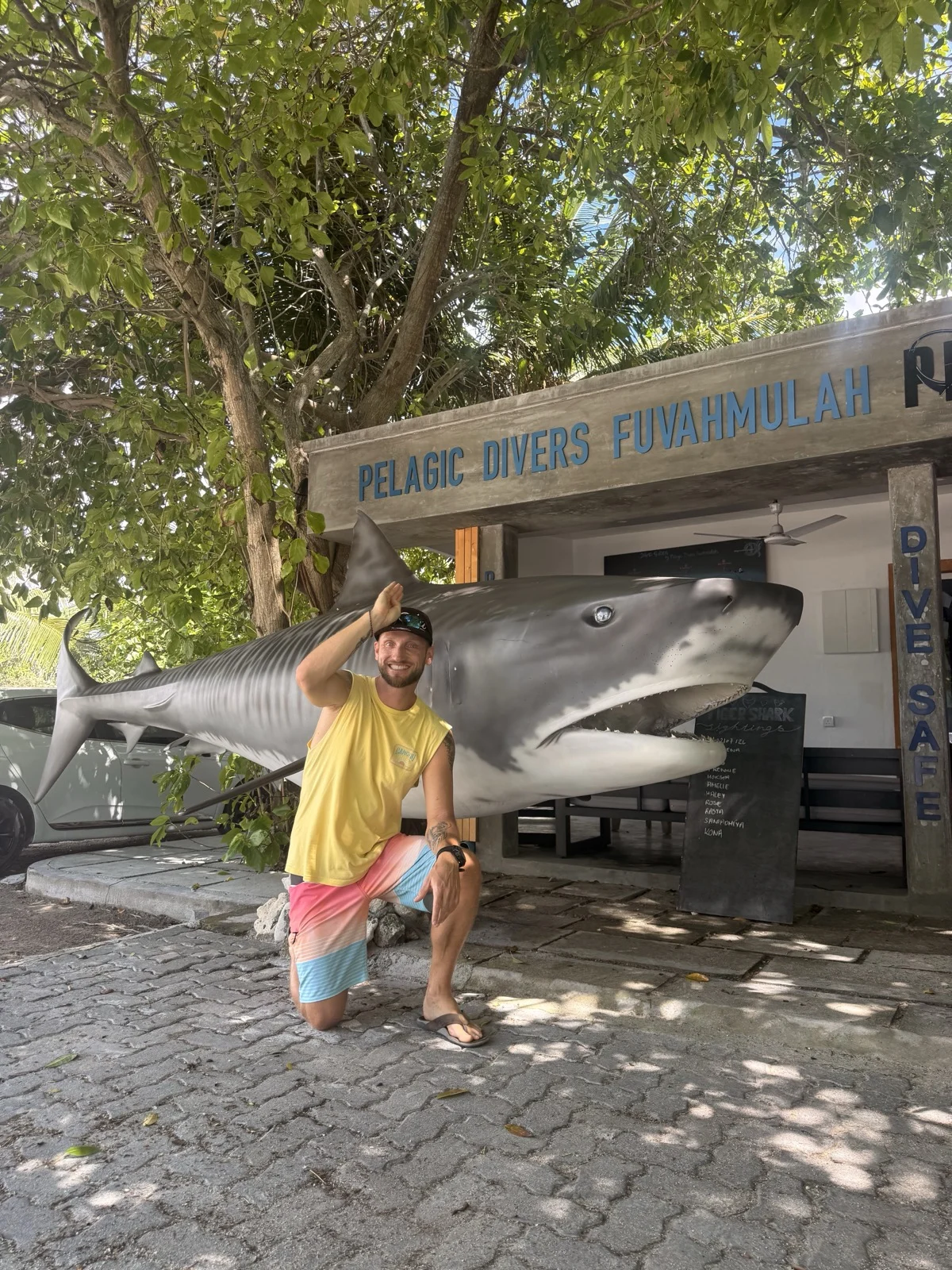
The local operation, Pelagic Divers Fuvahmulah, is a story of its own. It was built by Ahmed Inah, a Fuvahmulah native known around the island as Inah Shark, and it is a fully Maldivian-owned operation with an all-local dive team. The whole ethos is dive with locals. The shark tourism he and his team created has turned these apex predators into something the island now protects and celebrates rather than fears. That is conservation that actually works, because it makes a living shark worth far more than a dead one. Watching that model up close, run by people who love this ocean, was as moving as the diving itself.
The Doctors of the Sea
Here is what I did not fully understand until I spent real time in the water with people who have devoted their lives to these animals. Sharks are not the villains the movies made them out to be. They are the doctors of the ocean. They eat the dead, the dying, and the sick, and in doing so they keep entire ecosystems healthy and in balance. Take them out and the whole system unravels.
And it is not abstract, and it is not only the big famous ones. Every kind of shark holds a piece of the machine. Reef sharks keep reef fish in balance so the coral stays healthy. Tiger sharks keep turtles and rays moving so the seagrass meadows are not stripped bare, and that seagrass feeds fish nurseries and locks away enormous amounts of carbon. They are also the ocean's cleanup crew, eating the dead and the dying that most other animals will not touch, which keeps the water clean and stops disease from spreading. Pull any of them out and the effects ripple all the way down to the fish people eat and the reefs that soften the storms. We do not just coexist with sharks. We need them, far more than they have ever needed us.
And we are taking them out, fast. A 2024 study in the journal Science estimated that humans kill about 80 million sharks a year, tens of millions of them threatened species, driven largely by the fin trade. Compare that to the roughly six people sharks kill worldwide in an average year. Sit with that math for a second. We are terrified of them, and meanwhile we are the apex predator quietly wiping them out.
Here is the part that surprises most people: a lot of this is in your hands, in ways you would never guess. Shark ends up in places it is not labeled. In much of the world it is quietly sold under friendlier names, flake, rock salmon, huss, rig, or just whitefish, so the fish and chips or the fillet in the case can be shark without ever saying so. Shark liver oil, listed as squalene or squalane, still turns up in some moisturizers, sunscreens, and lip balms, though you can choose plant-based squalane made from olives or sugarcane instead. And even if you never buy shark on purpose, tens of millions die every year as bycatch, hauled up by accident on the longlines and gillnets set for tuna and swordfish. So read the labels, ask where your seafood actually came from, choose pole-and-line caught fish when you can, and pick beauty products that name a plant source. Small choices, multiplied by a lot of people, move the whole market.
The good news is that the tide turns wherever people choose to turn it. The Maldives has been a national shark sanctuary since 2010, with shark fishing banned across all its waters. In 2022, CITES nations voted to add protections for 54 more shark species targeted for their fins. And people like Inah, Ocean, and Juan are proving the model that actually works on the ground: a living shark, swum with and protected, is worth vastly more to a community than a dead one.
That is what this is really all about. Watching Ocean move through the water, and watching Inah's Pelagic Divers team run dive after dive with total respect for the animals, you realize it is not thrill tourism. It is a living argument for conservation. Every person who leaves Fuvahmulah having looked a tiger shark in the eye becomes one more human who will fight for them.
The Table Is Half the Trip
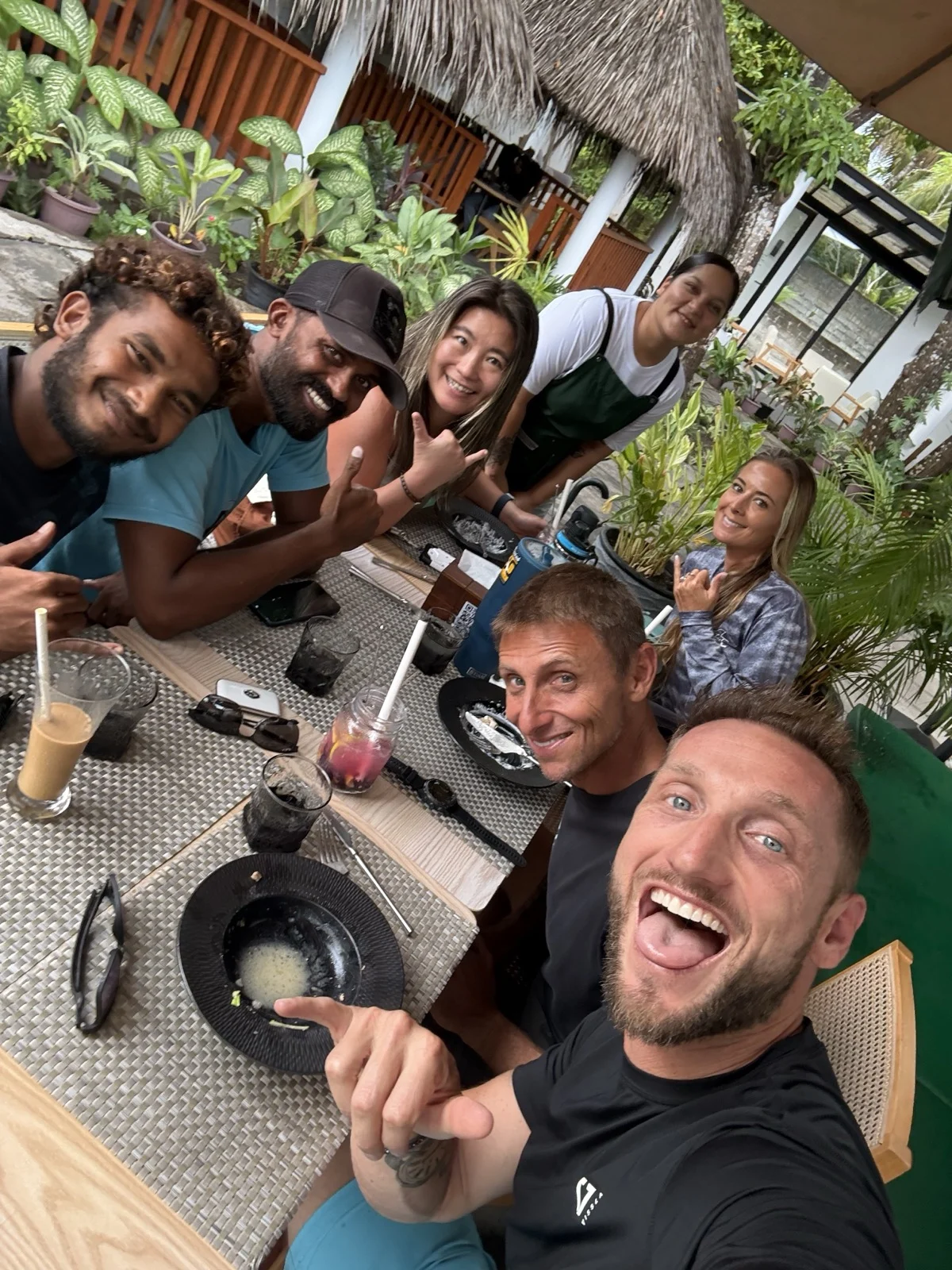
Here is something they leave out of the dive brochures. The best part of a trip like this is not only what happens in the water. It is the table afterward.
Sitting down for dinner with the gang, local guides and travelers from all over the world, laughing about the day and swapping stories, dead sober and fully present for every second of it, that is the part twenty-year-old me could never have pictured. I used to believe connection required a drink to lower the walls. It turns out the walls come down on their own when you are doing something that matters, with people who love the same thing you do. Sober travel gave me that. Real people, real connection, no fog over any of it, and I remember all of it.
The High No Drink Ever Gave Me
Here is the part that matters most to me, and the reason I write about this stuff at all.
For a long time, I thought I needed a substance to feel fully alive. To take the edge off, to turn the volume up, to escape. What I have found in nearly two decades sober is that the real highs, the ones that actually fill you instead of emptying you, are on the other side of presence. A tiger shark two feet away on a single breath, close enough to reach out and touch, will give you more aliveness than anything you can pour into a glass. And you remember every second of it.
That is the whole heart of what I do at Nomadic Addictt, and exactly why I believe so deeply in adventure-based recovery. Sober does not mean small. It means you get the full, undiluted version of your own life, including the parts that take your breath away. This trip was one of those parts.
It is Shark Week season as I write this, which feels about right. If the sharks on your screen stir something in you, let me tell you from firsthand experience: the real thing, in the real water, with the right people, is better than any documentary. These animals are curious and calm, not the monsters we were sold. All of this is more available to you than you might think, at any age, in full sobriety.
So here is my question for you. What is the experience you have been telling yourself you need to numb out to enjoy, when the truth is you would feel it a hundred times more fully awake?
Ready to explore your own sober adventure?
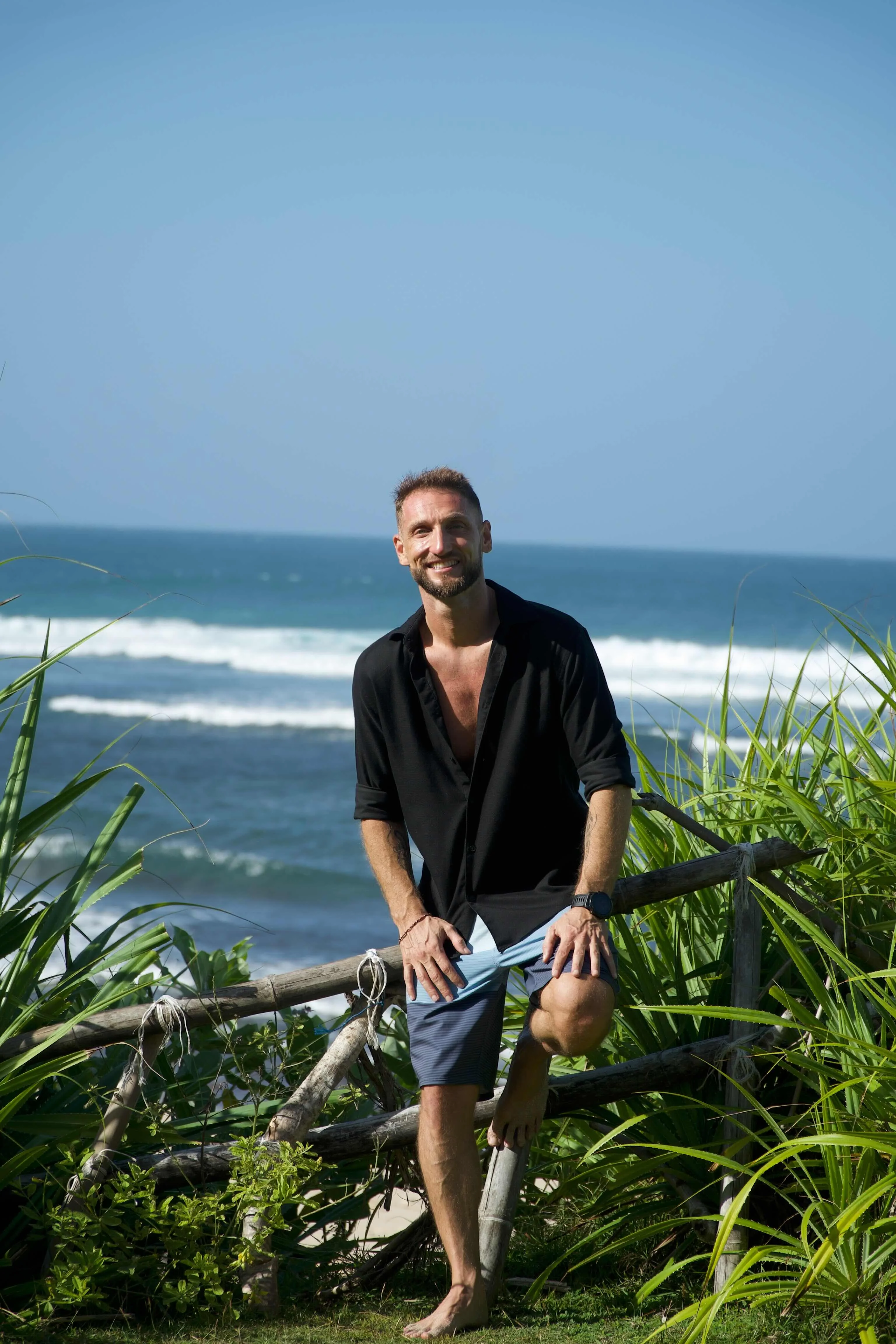
Whether you are chasing your own version of this, navigating early sobriety, or looking for someone to walk alongside you, I am here, for 1:1 sober coaching, sober companionship, or custom tailored sober adventures. Learn more at Nomadic Addictt or reach out and let's start the conversation.